



..Plans Expansion to 106 Government Institutions
By Amos Harris
IPNEWS: The Public Procurement and Concessions Commission (PPCC) has disclosed that government procurement awards valued at more than US$115.57 million have been processed through Liberia el no noectronic procurement platform, raising renewed attention to transparency, accountability, and the management of public funds.
The disclosure comes as the Commission announces plans to expand the electronic procurement system to 106 government institutions by January 2027, with an additional 50 entities expected to be integrated into the platform.
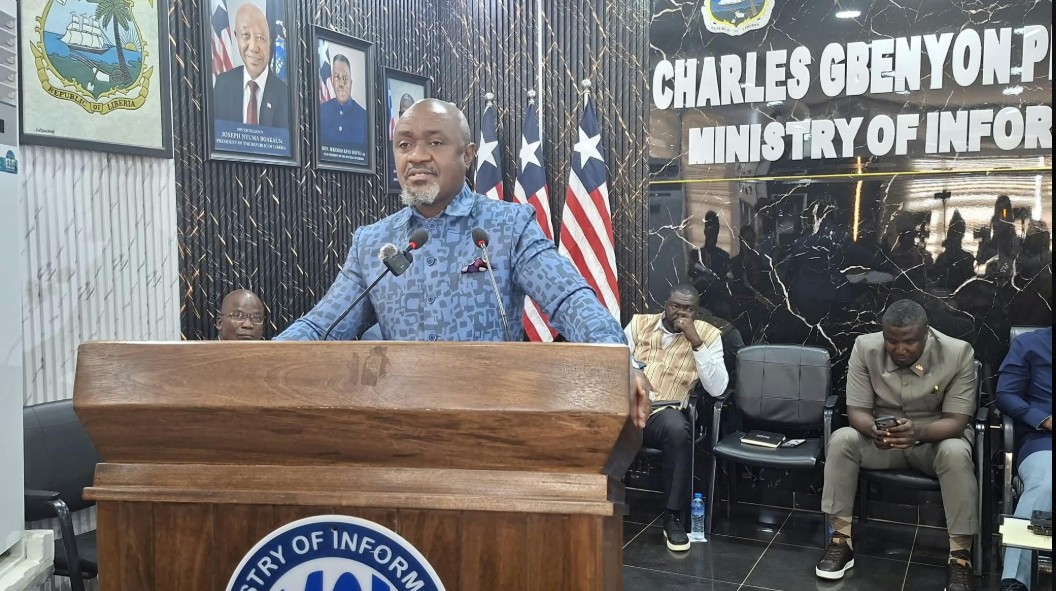
Speaking Thursday, November 19, 2026, at the Ministry of Information’s regular press briefing in Monrovia.
PPCC Executive Director Badger Scott Johnson said 56 government institutions are currently using the electronic procurement system.
Johnson disclosed that preparations and training are underway to facilitate the integration of the additional institutions, describing the expansion as part of efforts to modernize public procurement and strengthen transparency in government transactions.
However, the revelation of more than US$115.57 million in procurement awards raises important questions about the actual impact of the digital system on public accountability.
Particularly whether the platform is effectively preventing procurement irregularities, inflated contracts, favoritism, and other forms of financial abuse.
Although Johnson maintained that information about successful vendors and procurement activities is publicly accessible online, the availability of information alone does not guarantee accountability unless citizens, oversight institutions, and investigative authorities can effectively scrutinize the contracts and enforce compliance.
The PPCC Executive Director also disclosed that approximately 1,100 vendors have registered on the platform, while the Commission has generated nearly US$500,000 in government revenue through vendor registration and subscription fees.
He said the Commission continues to provide training and technical assistance to government institutions and registered vendors to improve their understanding and use of the electronic procurement system.
Despite these reported achievements, questions remain about the level of competition among registered vendors, the distribution of government contracts, and whether small Liberian-owned businesses are receiving fair opportunities to compete for public procurement awards.
Johnson commended President Joseph Nyuma Boakai for supporting procurement reforms and acknowledged the contributions of international development partners, including the World Bank, International Monetary Fund, United Nations, and African Development Bank.
As the government prepares to expand the platform in January 2027, the PPCC faces the challenge of demonstrating that the digital transformation is producing measurable improvements beyond the registration of institutions, vendors, and the publication of contract awards.
With more than US$115.57 million in government procurement awards already reported, citizens deserve more detailed information about the contractors, projects, contract values, implementation status, and whether taxpayers are receiving value for money.
Ultimately, the success of Liberia’s procurement revolution should not be measured only by the amount of money processed through an electronic platform, but by how effectively the system protects public resources, prevents corruption, promotes fair competition, and ensures that government contracts deliver tangible benefits to ordinary Liberians.
