



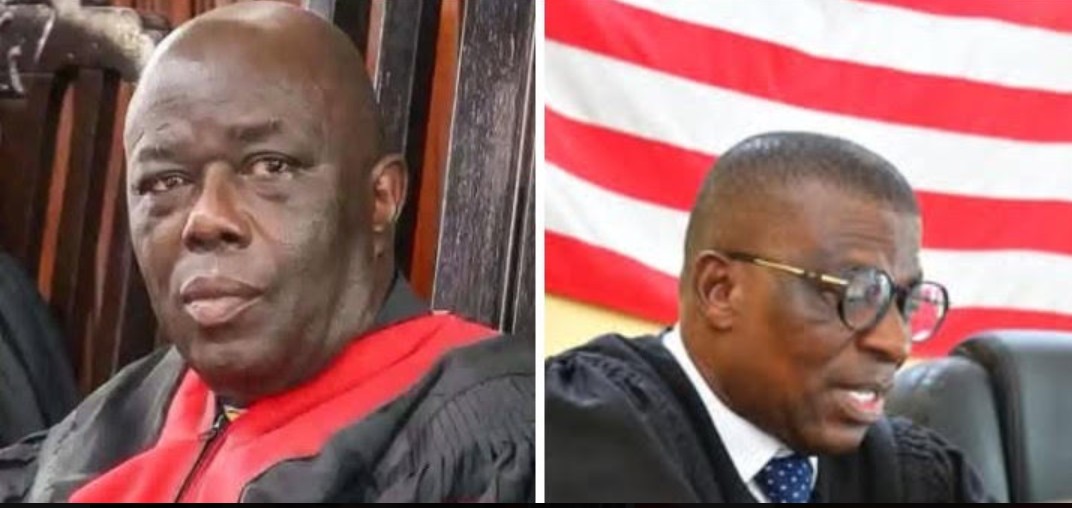
IPNEWS; A Liberian circuit court judge, His Honor Kennedy Peabody, has raised concerns about the exercise of administrative authority within the Liberian Judiciary, warning against the misuse of power, favoritism, and possible retaliation against judicial employees.
Judge Peabody made the remarks during his address at the opening of the November Term of Court in Grand Gedeh County on Monday, November 9, 2026.
Speaking under the theme, “When Public Office Becomes Private Property: The Corruption of Power, the Betrayal of Public Trust, and the Danger of Tribal Favoritism to Liberia’s Democracy,” the judge emphasized that public offices must serve the interests of the people rather than the personal interests of those occupying positions of authority.
Although Judge Peabody did not directly mention Chief Justice Yamie Quiqui Gbeisay Sr. by name, his comments appeared to raise questions about the exercise of administrative powers within the Judiciary, particularly decisions involving the transfer and reassignment of judicial employees.
The judge argued that administrative authority should be exercised fairly and transparently, with the primary objective of strengthening public institutions rather than punishing employees for personal disagreements or professional independence.
He warned that when people in leadership positions use their authority to intimidate or retaliate against subordinate employees, they create an atmosphere of fear that can weaken institutional performance and public confidence.
Judge Peabody further noted that while personnel transfers are legitimate administrative tools, they should not be used as instruments of punishment or retaliation.
He stressed that professional independence and commitment to the law should never be interpreted as acts of disloyalty toward institutional leadership.
CORRUPTION GOES BEYOND BRIBERY
In another part of his address, Judge Peabody challenged the traditional understanding of corruption, emphasizing that corruption is not limited to the exchange of money for favors.
He explained that corruption can also take the form of nepotism, conflicts of interest, tribal favoritism, discrimination, and the misuse of public authority to advance personal interests.
The judge questioned how public officials could condemn corruption while allegedly engaging in practices that favor relatives, protect personal friends, or deny qualified individuals equal opportunities.
He maintained that accountability must apply to everyone, regardless of their position, influence, or authority within government.
JUDICIAL REFORMS UNDER PUBLIC SCRUTINY
The judge’s remarks come amid administrative reforms being pursued by Chief Justice Yamie Quiqui Gbeisay Sr. since assuming leadership of the Liberian Judiciary.
Some of the reported measures include personnel verification, asset declaration requirements for judicial officers, administrative reviews, and the reassignment of judicial personnel.
While such measures have been presented as efforts to improve accountability and strengthen the Judiciary, questions have also emerged about the appropriate limits of administrative authority and the need to protect judicial independence.
The report also references previous controversy surrounding the recommendation of the Chief Justice’s son, Willeyon Y. Gbeisay, for a magistrate position, an issue that reportedly generated criticism and public discussion.
CALL FOR ACCOUNTABILITY AND JUDICIAL INDEPENDENCE
Judge Peabody’s remarks also bring renewed attention to earlier disagreements involving judicial officers and the administration of the Judiciary.
One reported disagreement involved Judge George Smith of Grand Kru County, who reportedly raised concerns about a reassignment decision following his medical treatment.
These developments have contributed to broader discussions about the balance between administrative authority, professional independence, and the protection of judicial employees.
Judge Peabody maintained that leadership positions must be exercised with fairness, transparency, responsibility, and respect for the rule of law.
He emphasized that no individual should use public office as a personal instrument to intimidate others, promote favoritism, or undermine institutional integrity.
As Liberia continues to strengthen its democratic institutions, the independence, accountability, and administration of the Judiciary remain important issues requiring public attention.
