



IPNEWS: The Government of Liberia has announced the transformation of the Bureau of State Enterprises (BSE) into the State-Owned Enterprises Authority of Liberia (SEAL), an autonomous institution established by an Act of the National Legislature to strengthen oversight and accountability within state-owned enterprises.
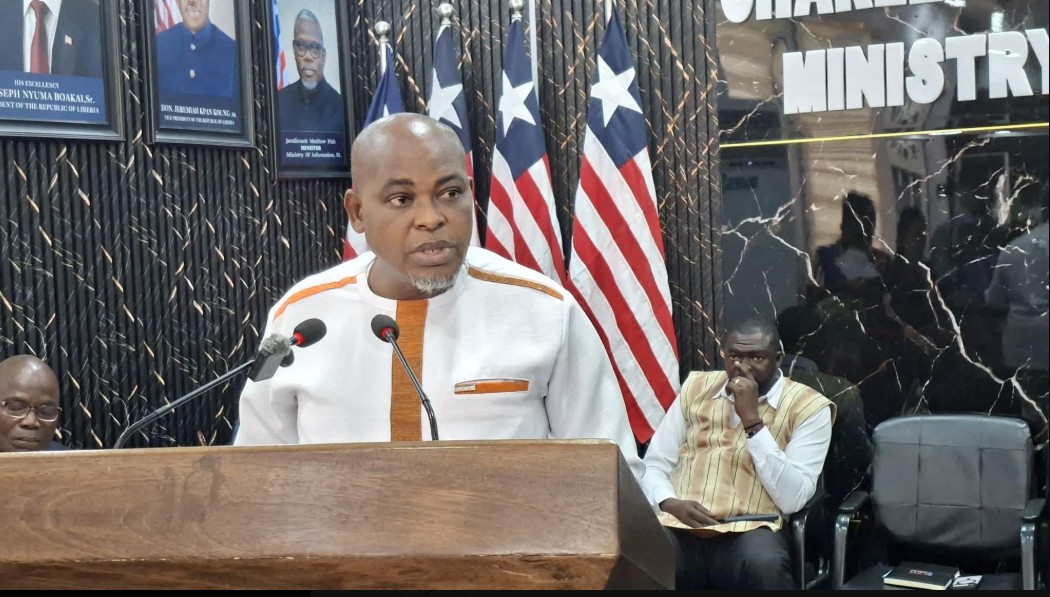
The Director-General of the Bureau of State Enterprises, J. S. B. Theodore Momo, Jr., disclosed the development on Thursday, November 19, 2026, while speaking at the Ministry of Information’s regular press briefing in Monrovia.
Momo described the transition as a major institutional reform intended to improve governance, strengthen regulatory oversight, and promote greater accountability among Liberia’s state-owned enterprises.
He emphasized that the transformation goes beyond a change of name, representing a significant shift in institutional authority, purpose, and responsibility.
According to him, the Bureau of State Enterprises was established in 1985 under Decree No. 8 of the Interim National Assembly, with the responsibility of advising the government on the formulation, administration, and supervision of state-owned enterprises.
He disclosed that Liberia currently has 46 state-owned enterprises operating across critical sectors, including energy, water and sanitation, maritime and ports, telecommunications, agriculture, forestry, insurance, gaming, health, and education.
These institutions collectively employ more than 10,000 Liberians and contribute over US$30 million annually to national revenue.
However, Momo acknowledged that the former Bureau faced significant institutional weaknesses that undermined its ability to effectively supervise these public institutions.
Among the challenges were an outdated legal framework, weak enforcement powers, inadequate financial resources, prolonged institutional inactivity, and severe staffing limitations.
He explained that the 1985 decree gave the Bureau limited authority to request information, provide professional advice, and make recommendations, but lacked the legal powers necessary to compel state-owned enterprises to comply with its decisions.
The Director-General further revealed that the institution operated with approximately 62 employees and an annual budget of less than US$1 million, making it difficult to recruit and retain qualified professionals in finance, law, and sector regulation.
Momo also disclosed that the Bureau’s oversight coverage was limited to approximately 20 of the country’s 46 state-owned enterprises, leaving 26 institutions with minimal central supervision.
He attributed some of the monitoring challenges to outdated manual and paper-based reporting systems, which contributed to delays and inconsistencies in financial information.
He noted that only 13 percent of state-owned enterprises were submitting compliant quarterly reports, a situation that reportedly weakened effective monitoring, transparency, and timely government decision-making.
Addressing the financial implications of the sector, Momo disclosed that an analysis of 20 state-owned enterprises covering the period from 2020 to 2024 showed that more than US$90.5 million was transferred from the national budget to support their operations.
He described the financial figures as evidence of the urgent need for stronger institutional oversight, improved management, and reforms aimed at making state-owned enterprises more financially sustainable and less dependent on government subsidies.
The Director-General said the establishment of SEAL is expected to address these longstanding challenges through a stronger legal and institutional framework that will improve supervision, enforce accountability, and promote effective management of public enterprises.
Director Momo also expressed appreciation to Information Minister Jerolinmek Matthew Piah and his team, including Deputy Minister Daniel O. Sando, for providing a platform through which government institutions communicate policies, reforms, and public sector developments to citizens.
The transition raises expectations that SEAL will move beyond institutional restructuring to deliver measurable improvements in the performance of Liberia’s 46 state-owned enterprises, particularly in financial reporting, revenue generation, accountability, and the protection of public resources.
