



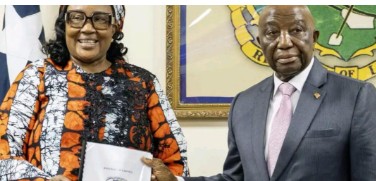
IPNEWS: The Ministry of Health (MOH) has been reelected as a Co-Principal Recipient (Co-PR) for Global Fund grants covering HIV, tuberculosis, and malaria for the 2027–2029 implementation period.
Alongside this selection, Liberia received a US$74.25 million allocation for Grant Cycle 8 (GC8) to support national health programs and strengthen local health systems.
The reselection restores direct grant implementation authority to the Liberian government following a multi-year period where international partners managed the funds.
The Ministry of Health had been removed from managing grants after an April 2022 investigation by the Global Fund Office of Inspector General identified roughly US$1.1 million in non-compliant expenditures and financial mismanagement.
A Global Fund delegation visited Monrovia in early November 2026 to review grant support, financial management systems, and health sector transition plans with Health Minister Dr. Louise M. Kpoto and local stakeholders.
Prior to this transition, Plan International and Catholic Relief Services (CRS) served as the sole Principal Recipients overseeing TB/HIV and malaria grants in Liberia. [1, 2]
For the 2026–2028 allocation period, the Global Fund announced a total allocation of US$74.25 million for Liberia, representing a 15% reduction from the initial US$87.31 million allocation in Grant Cycle 7.
| Health Component | GC8 Allocation (2026–2028) | Previous GC7 Allocation |
| Malaria | US$38.80 million | US$43.53 million |
| HIV/AIDS | US$28.88 million | US$35.96 million |
| Tuberculosis (TB) | US$6.58 million | US$7.81 million |
| Total Allocation | US$74.25 million | US$87.31 million |
Under GC8 guidelines, Liberia is working to progressively assume leadership, management, and domestic co-financing of health programs to reduce long-term reliance on external donors.
Funding is focused on combining HIV, TB, and malaria interventions directly into Liberia’s primary healthcare framework.
Investments target critical infrastructure, including supply chain capacity, laboratory networks, digital health tools, and community health worker support.
