



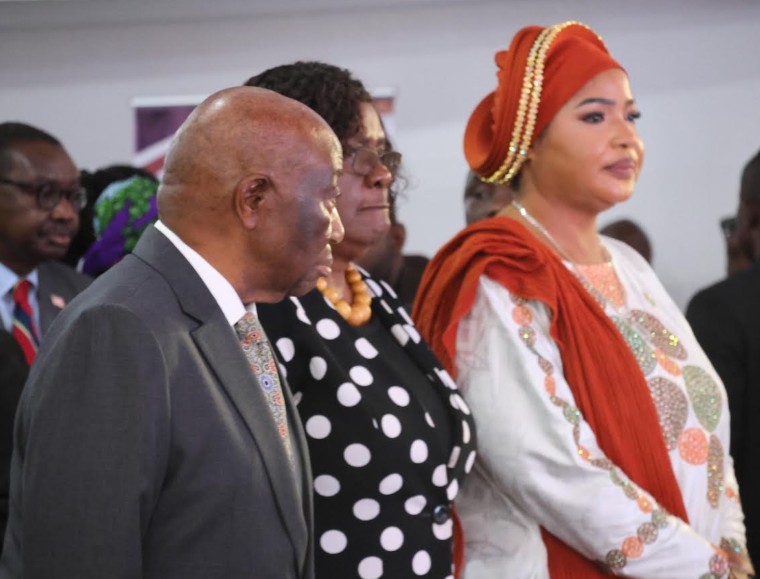
IPNEWS: has taken a significant step toward confronting its past and shaping a more peaceful future with the launch of the Steering Committee for the proposed Liberia Peace, Reconciliation and Memorial Museum, a landmark initiative that seeks to preserve the nation’s history, honor victims and survivors, and strengthen the foundations of reconciliation.
At the inaugural meeting of the National Steering Committee in Monrovia, Aliou Mamadou Dia, United Nations Development Programme (UNDP) Resident Representative and Co-Chairperson of the Steering Committee, reaffirmed UNDP’s commitment to supporting the Government of Liberia in transforming the vision into a lasting national institution.
He described the museum as a critical investment in remembrance, healing, historical preservation, and sustainable peace.
Speaking before President Joseph Nyuma Boakai, members of government, the diplomatic community, international partners, and representatives of Rwanda and South Africa, Ambassador Dia noted that Liberia’s journey toward lasting peace requires more than the absence of conflict.
It requires preserving historical truth, recognizing the experiences of victims and survivors, and ensuring that future generations understand both the causes and consequences of war.
“Today, we are not simply inaugurating a Steering Committee,” Ambassador Dia declared. “We are taking a decisive step towards reclaiming Liberia’s history, preserving its collective memory and investing in the foundations of a more peaceful, reconciled and united nation.”
The proposed museum is envisioned as far more than a physical structure. It will serve as a living institution where the stories of Liberia’s civil conflict are preserved, where victims are remembered with dignity, and where survivors can contribute their voices to the national narrative.
It is designed to become a place of truth, reflection, learning, and dialogue, helping Liberians confront the past while inspiring future generations to protect peace.
The initiative also represents an important milestone in implementing long-standing national aspirations. Ambassador Dia recalled that Liberia’s Truth and Reconciliation Commission recommended a National History Project in 2009, recognizing that meaningful reconciliation requires confronting the past and preserving collective memory. Seventeen years later, that vision is beginning to take shape through concrete national action under the leadership of President Boakai.
The museum forms part of the President’s broader efforts to advance national healing and historical recovery, building on the National Healing, Reconciliation and Unity Programme and the National Historical Recovery Initiative.
Together, these efforts seek to strengthen national identity, foster social cohesion, and create opportunities for citizens to engage honestly with Liberia’s complex history.
A key feature of the process is its emphasis on inclusivity and national ownership. Ambassador Dia stressed that the voices of victims, survivors, women, young people, community leaders, historians, educators, and civil society organizations must be central to the museum’s development.
“Their stories and perspectives must not be peripheral to the process. They must help shape its very foundation,” he emphasized.
Drawing on lessons from study visits to Rwanda and South Africa, Ambassador Dia highlighted how memorialization, truth-telling, and public education can help societies heal from periods of violence and division.
While acknowledging Liberia’s unique history and context, he noted that international experiences offer valuable insights into how remembrance can support reconciliation, institutional transformation, and national renewal.
At the heart of the initiative, however, is a distinctly Liberian vision. “Liberia will learn from the world, but Liberia’s story must be told by Liberians,” Dia said, emphasizing that ownership, historical integrity, inclusiveness, and respect for the dignity of victims and survivors must guide every stage of the process.
UNDP has committed to supporting the initiative through technical coordination, institutional development, international cooperation, resource mobilization, and strategic partnerships to ensure the museum becomes a sustainable reality.
As the Steering Committee begins the work of finalizing the museum’s charter, implementation framework, financing strategy, and technical workstreams, the UNDP Liberia Resident Representative called on all stakeholders to move beyond declarations of support and focus on delivering concrete results.
The proposed Liberia Peace, Reconciliation and Memorial Museum stands as a powerful symbol of the country’s determination to remember with honesty, learn from its past, and build a future defined not by conflict, but by dignity, unity, and lasting peace.
As Dia reminded participants, remembrance is not simply an act of looking back. It is an investment in ensuring that future generations can move forward together under the shared promise of “Never Again.”
