



—-As U.S. Congress Introduces Resolution on Human Rights Violation
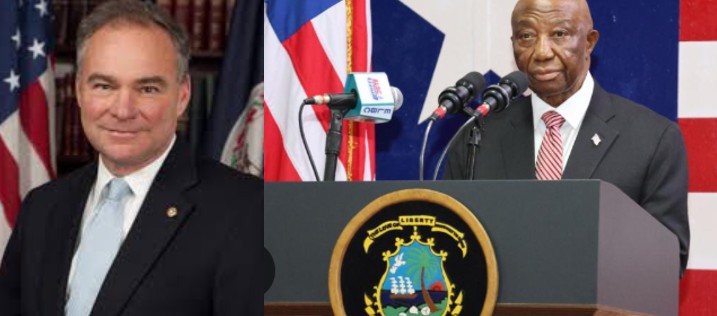
IPNEWS: U.S. security assistance to Liberia is under legislative scrutiny following the introduction of Senate Resolution 886 (S. Res 886), which invokes Section 502B(c) of the Foreign Assistance Act of 1961 to demand a formal State Department human rights report.
Introduced on September 23, 2026, by Senator Tim Kaine (D-VA) and referred to the Senate Committee on Foreign Relations, the resolution does not immediately cut funding, as simple resolutions do not carry the force of law. However, under Section 502B(c), passing such a resolution triggers a statutory oversight mechanism that can lead to formal restrictions or termination of security aid if human rights abuses are verified.
The resolution primarily responds to an August 2026 agreement where Liberia accepted up to 1,200 third-country nationals removed from the U.S.. It mandates an assessment of whether U.S. security assistance could facilitate human rights abuses against these detainees or others, questioning if individuals face unlawful detention or refoulement to places of torture.
The State Department must disclose all diplomatic agreements and financial transactions tied to the transfers, alongside reporting on broader domestic abuses such as torture, disappearances, and unlawful imprisonment.
If the S. Res. passes, the Secretary of State has 30 days to submit the report; failure to do so automatically suspends security assistance. The bill currently sits with the Senate Committee on Foreign Relations awaiting further action.
Already, the U.S. Department of State ‘s 2024 Country Report on Human Rights Practices for Liberia—which covers the first year of President Joseph Boakai’s administration found “no significant changes” in Liberia’s overall human rights situation.
The report cataloged persistent abuses and weak accountability.
The core findings document systemic issues across state security, the justice system, and civil liberties.
The report cites credible reports of arbitrary or unlawful killings, torture, and cruel or degrading treatment by state security forces. A prominent case noted in the findings involved the suspicious April 2024 death of an inmate at Fish Town Central Prison, which sparked local protests and a prison break, leading to charges against six corrections officers including prolonged pretrial detention remains a widespread issue. Approximately 60 percent of pretrial detainees—particularly those facing felony charges—were held for over 180 days without trial, exceeding the legal limit of two court terms. The report also noted corruption and bribery within the bail system.
The report highlight that Officials of th Boakai’s administration placed significant restrictions on freedom of expression and media freedom, including threats of violence, harassment against journalists, censorship, and stricter Executive Mansion press accreditation requirements. Public servants also faced dismissals or threats for expressing dissenting views.
Public and state-sector workers remained legally barred from unionizing, while labor laws in the informal sector were poorly enforced. Additionally, trafficking in persons persisted with weak enforcement and protection gaps.
Although the government took steps to investigate and punish some officials, the State Department concluded that impunity and weak institutional accountability remained pervasive throughout the period under review.
However, the Executive Mansion announced that President Boakai had instructed the Ministry of Justice and the Independent National Commission on Human Rights (INCHR) to review the findings and develop actionable policy reforms to address the gaps.
In July 2026, the Civil society groups, including the Solidarity & Trust for a New Day (STAND), cited the report as evidence of stalled progress under the administration’s “Rescue Agenda”. Subsequent commentary in late 2026 has continued to scrutinize the Boakai government’s governance record, pointing to ongoing friction between the executive branch and the judiciary, mass suspensions of officials over asset declarations, and police conduct during public demonstrations.
