



A Call for Free Education, Public-Private Partnerships, Educational Reform, and Greater Government Accountability
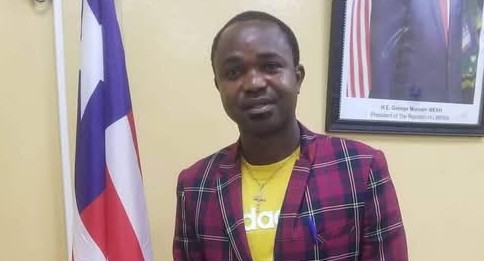
An Opinion Article by Amos Mulbah Lavalah
Former Representative Candidate, Electoral District #3, Montserrado County, Republic of Liberia
Education is the foundation of every successful nation. It is through education that countries develop responsible leaders, skilled professionals, innovative entrepreneurs, and productive citizens capable of contributing to national development. No nation can achieve sustainable economic growth, reduce poverty, or build strong democratic institutions without making meaningful investments in the education of its people. Yet Liberia, a country blessed with enormous human potential and natural resources, continues to struggle with serious challenges in its educational system.
As a former candidate for the House of Representatives in Electoral District #3, Montserrado County, Republic of Liberia, I have come to realize that education has not consistently received the level of attention, investment, and commitment it deserves from successive national administrations. Although various governments have introduced educational policies and programs, the continued difficulties experienced by students, teachers, and parents demonstrate the need for stronger implementation, adequate financing, and long-term national planning.
My concern about Liberia’s educational system is not merely political; it is also deeply personal. I was raised in a humble family where my mother worked tirelessly as a market woman, selling goods in Red Light, while my father served as an immigration officer before his retirement. Despite their financial responsibilities and the economic difficulties they encountered, my parents made tremendous sacrifices to ensure that their children received a quality education.
All of us attended private educational institutions, and I personally witnessed the struggles my parents endured to pay our tuition and meet other educational expenses. There were moments when providing school fees required significant personal sacrifices, yet they remained committed to giving us opportunities for a better future. Their determination taught me an important lesson: education is not simply a personal achievement but an investment that can transform families, communities, and entire nations.
Whenever I reflect on their sacrifices, I think about the thousands of Liberian parents who face similar difficulties today. Many hardworking mothers and fathers struggle daily to provide food, shelter, healthcare, and education for their children. Unfortunately, not every family has the financial capacity to send its children to private schools, particularly when public educational facilities are unavailable, overcrowded, or inadequately equipped.
This reality raises a fundamental question: If ordinary Liberian parents can make extraordinary sacrifices to educate their children, why should our national government not demonstrate an even greater commitment to making quality education accessible to every child?
Liberia’s educational challenges cannot be separated from its painful history. The country’s civil conflicts between 1989 and 2003 severely damaged educational infrastructure, displaced teachers and students, disrupted learning, and deprived many young people of educational opportunities. Although Liberia has made progress in rebuilding its institutions since the end of the conflict, significant challenges remain.
Many schools continue to struggle with inadequate classrooms, insufficient teaching materials, limited technological resources, shortages of qualified teachers, and disparities in educational opportunities between urban and rural communities. These challenges affect not only students’ academic performance but also the country’s ability to develop the skilled workforce needed for economic transformation.
As a concerned Liberian citizen and former representative candidate, I believe we must begin asking difficult but necessary questions. Why are many public schools still struggling to provide basic educational resources? Why do some teachers continue to work under difficult conditions without adequate professional support? Why do children from financially disadvantaged families face obstacles to completing their education? And why does education often receive considerable attention during political campaigns without always receiving the sustained investment required to produce lasting improvements?
These questions should not be interpreted simply as criticism of past or present governments. Rather, they should serve as a national call for reflection, accountability, and meaningful action.
One of my strongest recommendations is that the Government of Liberia should establish more effective partnerships with accredited private educational institutions. Given the capacity limitations of some public schools, it is important to explore alternative approaches that would allow more children to access quality education without placing unbearable financial burdens on their parents.
Through well-structured public-private partnerships, the government could negotiate agreements with qualified private schools to enroll students from low-income families while providing tuition subsidies, scholarships, or other financial assistance. Such partnerships could help reduce overcrowding in public schools and expand educational opportunities in communities where government-owned facilities are insufficient.
However, these arrangements must be guided by transparency, accountability, and strict educational standards. Participating private schools should demonstrate their ability to provide qualified teachers, appropriate learning environments, and affordable educational services. Government financial support should be tied to measurable improvements in student access and learning outcomes.
I firmly believe that the government’s responsibility is not limited to building and managing public schools. Its broader responsibility is to ensure that every Liberian child has a fair opportunity to acquire the knowledge and skills necessary for personal advancement and national development.
Another important recommendation is the expansion and effective implementation of genuinely free education from early childhood, commonly known in Liberia as ABC, through Grade 12.
Although Liberia has adopted measures intended to improve access to education, the financial challenges facing many families demonstrate that additional efforts are necessary. Free education should not be understood merely as the removal of tuition fees. It should also involve practical measures to reduce the costs of textbooks, uniforms, instructional materials, examination fees, and other expenses that prevent children from attending school regularly.
For many low-income families, these additional expenses can become serious obstacles. A child may technically have access to a tuition-free public school but still struggle to attend because the family cannot afford the necessary learning materials or transportation.
If Liberia genuinely desires to develop its human capital, the government must establish a sustainable educational financing strategy that progressively removes these barriers while maintaining quality teaching and learning standards.
The long-term benefits of such an investment would extend far beyond the classroom. Greater educational access can contribute to improved literacy, stronger employment prospects, increased productivity, responsible citizenship, and reduced intergenerational poverty.
I also believe that we must reconsider how our society treats young people, particularly during political activities. Too often, young people become highly visible during election campaigns, political rallies, and public demonstrations, yet their educational and economic challenges do not always receive the same level of attention after elections.
Our young people should never be valued merely for their ability to mobilize crowds or support political ambitions. They should be recognized as future teachers, doctors, engineers, accountants, entrepreneurs, lawmakers, and national leaders whose potential must be developed through meaningful educational opportunities.
If we are serious about preparing young Liberians for leadership, we must invest in their classrooms before expecting them to participate in our political campaigns.
A third recommendation is that the Government of Liberia should review its taxation policies affecting private educational institutions and consider targeted tax relief or incentives for schools that demonstrate a genuine commitment to affordable and quality education.
Private schools contribute to Liberia’s educational development, particularly in communities where public facilities may be insufficient. However, certain operational expenses and financial obligations can affect the cost of delivering educational services, which may ultimately influence the tuition charged to parents.
The government should therefore assess whether appropriate tax exemptions, reductions, or other incentives could encourage qualifying private institutions to lower tuition fees, expand scholarships, improve school facilities, and provide educational opportunities for disadvantaged children.
Such incentives should not be unconditional. Any private school benefiting from government support should be required to demonstrate measurable improvements in affordability, educational quality, and access for vulnerable students.
This approach would encourage cooperation between the government and private institutions while ensuring that public benefits reach the families and children who need them most.
Nevertheless, meaningful educational reform cannot be achieved through free education, private-school partnerships, and tax incentives alone. Liberia must also prioritize teacher development, improved school infrastructure, technical and vocational training, curriculum reform, and the responsible introduction of modern educational technology.
Teachers are central to the success of every educational system. Without qualified, motivated, and adequately supported teachers, even the most ambitious educational policies will struggle to produce meaningful results. Improving teacher compensation, professional development opportunities, and working conditions should therefore remain essential components of national educational reform.
Similarly, technical and vocational education must receive greater attention. Not every young Liberian will pursue a university degree, but every young person deserves the opportunity to acquire practical skills that can lead to employment, entrepreneurship, and economic independence.
Liberia needs skilled agricultural workers, electricians, technicians, construction professionals, information technology specialists, healthcare workers, and entrepreneurs who can contribute to the country’s development. Strengthening vocational education would help prepare young people for these opportunities.
Another critical issue is accountability in educational spending. Government resources allocated to education must be managed transparently and efficiently. Educational institutions should be evaluated based on measurable improvements in student enrollment, attendance, learning outcomes, teacher performance, and school completion rates.
National development requires more than announcing policies or increasing budgetary allocations. It requires ensuring that public resources produce meaningful improvements in the lives of ordinary citizens.
As someone who personally benefited from the sacrifices of hardworking parents, I strongly believe that no Liberian child should be denied educational opportunities because of poverty. My mother’s dedication as a market woman and my father’s commitment as an immigration officer remind me that many families are already doing everything within their means to educate their children.
The government must recognize these sacrifices and develop policies that reduce the financial pressure on families while strengthening the quality of education throughout the country.
Liberia is blessed with talented, intelligent, creative, and hardworking young people. However, talent alone cannot transform a nation without the educational opportunities necessary to develop it.
We cannot continue to speak about economic development, national unity, poverty reduction, and good governance while overlooking the importance of educating our citizens. Education is not simply one sector among many; it is a foundation upon which progress in other sectors depends.
My appeal is therefore directed not only to the current administration but also to the Legislature, the Ministry of Education, educational institutions, civil society organizations, development partners, parents, and all patriotic Liberians. Improving education must become a shared national responsibility that extends beyond political affiliations, personal interests, and changes in government.
We must move away from short-term political promises and embrace long-term educational planning that produces measurable results for future generations.
As a former representative candidate, I remain convinced that Liberia’s future depends significantly on the decisions we make today regarding the education of our children.
The future of Liberia does not begin with political promises; it begins in our classrooms.
If we genuinely desire a peaceful, prosperous, and developed Liberia, then we must be willing to invest in the teachers who educate our children, the schools that nurture their talents, and the policies that make educational opportunities accessible to all.
Our children deserve more than promises. They deserve classrooms equipped for learning, teachers prepared to inspire them, and a government committed to protecting their educational future.
Our parents deserve relief from the overwhelming financial burdens associated with educating their children. Our teachers deserve respect, professional support, and improved working conditions. Above all, our country deserves an educational system capable of preparing future generations to compete, innovate, and contribute meaningfully to national development.
Liberia cannot build a stronger tomorrow while neglecting the education of its children today.
The time for meaningful educational reform is now. Let us invest in our children, strengthen our educational institutions, support our teachers, and work collectively toward building a nation where education is a right enjoyed by every child rather than a privilege determined by family income.
Education is not an expense; it is an investment in the future of our nation.
About the Author
Amos Mulbah Lavalah is a former candidate for the House of Representatives in Electoral District #3, Montserrado County, Republic of Liberia.
