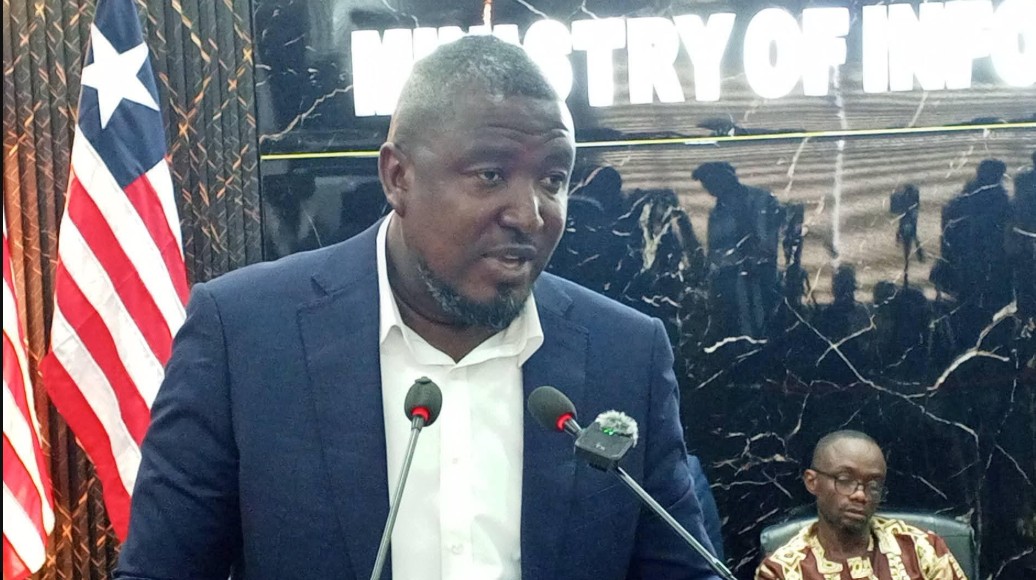
IPNEWS: The Government of Liberia has reassured the public that there is no plan to arrest former President George Manneh Weah, dismissing reports circulating on social media and local radio stations as false and misleading.
The clarification was made on Tuesday, November 17, 2026, by Deputy Minister of Information Daniel O. Sando during the Ministry of Information’s regular press briefing in Monrovia.
Where he emphasized the government commitment to maintaining peace, political stability and respect for the rule of law.
Deputy Minister Sando urged journalists, radio commentators and social media users to exercise responsibility in reporting sensitive political developments, warning that the circulation of unverified information could create unnecessary fear and undermine public confidence.
He further clarified that the controversy surrounding the reported theft of Saudi-donated rice has no connection to former President Weah, separating the former Liberian leader from allegations surrounding the management of the donated humanitarian commodity.
The government’s clarification comes at a time when Liberia’s political environment is attracting increased public attention following a major ruling by Criminal Court ‘C’ involving former government officials and individuals associated with the opposition Coalition for Democratic Change (CDC).
In a significant development in the country’s fight against corruption, the court reportedly sentenced former Foreign Affairs Minister Dee-Maxwell Saah Kemayah, former Internal Affairs Minister Varney A. Sirleaf and four other former officials to 10 years in prison each over their alleged involvement in the Saudi-donated rice scandal.
The court also ordered the convicted individuals to repay US$425,918, representing the reported value of 25,054 bags of rice allegedly stolen from the donated consignment intended to benefit vulnerable Liberians.
The ruling underscores the importance of accountability, transparency and responsible management of humanitarian assistance, particularly donations provided to support citizens facing economic and social difficulties.
Meanwhile, two other defendants are reportedly expected to face retrial, while defense lawyers have indicated plans to challenge the ruling before the Supreme Court of Liberia, leaving further legal proceedings ahead.
Against this background, the Boakai administration has maintained that there is no intention to arrest former President Weah, while its clarification offers an opportunity to address public concerns and prevent speculation from escalating into unnecessary political confrontation.
The government has also urged Liberians to remain calm and avoid spreading information capable of threatening national peace, particularly at a time when political differences and legal developments are generating public debate.
The administration’s position reinforces the importance of democratic stability and the principle that political disagreements must be resolved through lawful and constitutional processes rather than speculation, intimidation or misinformation.
As Liberia continues to strengthen its democratic institutions, the government faces the responsibility of ensuring that justice is administered fairly, investigations remain credible and every citizen, regardless of political affiliation, enjoys equal protection under the law.
Ultimately, the government’s reassurance sends a message that political stability and national unity remain important priorities.
While the ongoing rice scandal serves as a reminder that public resources and humanitarian donations must be protected through transparency, accountability and responsible leadership.
Earlier on Monday, t
he Government of Liberia rejected the weekend allegations that former President George Manneh Weah is facing imminent arrest, describing reports circulating on social media and local radio stations as false and misleading. However, the denial comes amid heightened political tensions following a major court ruling involving former government officials and members associated with the opposition Coalition for Democratic Change (CDC).
Deputy Minister of Information Daniel O. Sando made the clarification on Tuesday, November 17, 2026, during the Ministry of Information’s regular press briefing in Monrovia, insisting that the government has no intention of arresting the former Liberian leader.
Sando cautioned journalists, radio commentators and social media users against spreading unverified information, arguing that such claims could create unnecessary fear, damage reputations and increase political tensions in an already sensitive political environment.
He also addressed allegations surrounding the reported theft of Saudi-donated rice, emphasizing that the matter has no connection to former President Weah.
However, his clarification has not ended public discussions about the rice scandal and the accountability of individuals implicated in the controversy.
The government’s statement raises broader questions about public confidence, political accountability and the need for timely communication whenever allegations involving prominent political figures emerge.
While denying an arrest plan, authorities must ensure that their statements are supported by facts and that the public receives credible information.
Meanwhile, some supporters of the CDC have accused the government of allegedly targeting the opposition, claiming that actions against individuals associated with the party are politically motivated. However, such allegations require independent evidence and should not be treated as established facts.
The controversy is unfolding against the background of a major ruling by Criminal Court ‘C’, which reportedly sentenced several former government ministers and individuals associated with the CDC to 10 years in prison each over their alleged roles in the Saudi-donated rice scandal.
Among those sentenced are former Foreign Affairs Minister Dee-Maxwell Saah Kemayah and former Internal Affairs Minister Varney A. Sirleaf, alongside four other former officials.
The ruling represents a significant development in the country’s efforts to address allegations of corruption and the misuse of donated public resources.
The court also ordered the convicted individuals to repay US$425,918, representing the reported value of 25,054 bags of rice allegedly stolen from the Saudi-donated consignment.
The financial order further raises questions about the management, distribution and oversight of humanitarian donations intended to benefit vulnerable Liberians.
However, the conviction and sentencing do not end the legal proceedings, as two other defendants are expected to face retrial, while defense lawyers have reportedly announced plans to challenge the ruling before the Supreme Court of Liberia.
Against this background, the government’s denial of an arrest plan involving Weah should not be interpreted as an end to public scrutiny of the rice scandal or other allegations of misconduct.
Equally, political affiliation should neither shield individuals from prosecution nor expose them to selective justice.
The Boakai administration must demonstrate that the rule of law applies equally to members of the ruling establishment and the opposition.
Any investigation or prosecution must be guided by credible evidence, due process and judicial independence rather than political considerations.
Liberians deserve more than political accusations and official denials, they deserve transparent investigations, credible public information and equal justice, regardless of whether those involved belong to the ruling Unity Party, the opposition CDC or any other political institution.