



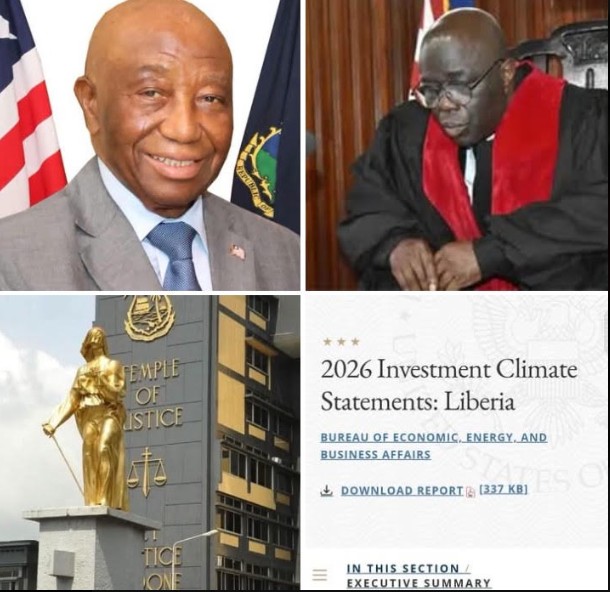
IPNEWS: In its 2026 Investment Climate Statement, the U.S. Department of State raised concerns that Liberi’s Executive branch under President Joseph Boakai frequently interferes in both judicial and legislative matters.
According to Media reports, the State Department’s assessment highlights systemic institutional challenges affecting governance and foreign investment.
Key Concerns Raised in the U.S. Report
The U.S. State Department notes that the executive branch often intervenes in the operations of Liberia’s courts and the Legislature.
The report also flags concerns that government officials frequently fail to respect judicial decisions.
The assessment further points to endemic corruption, risks in government transactions, delays in resolving commercial disputes, and allegations of bribery within the court system.
Broader Political and Legal Context
The State Department’s observations follow several high-profile legal and political disputes during the Boakai administration.
The report follows controversial legal proceedings, including the case involving former Finance Minister Samuel D. Tweah Jr.. Following his acquittal in a US$6.2 million national security expenditure case, Tweah wrote to United Nations Secretary-General António Guterres alleging political interference and post-verdict efforts to undermine the jury’s decision.
Local commentary on the report also links the concerns to disputes over executive appointments and leadership crises within the Legislature.
President Boakai campaigned on promises to uphold the rule of law and protect judicial independence. The administration has consistently maintained that its legal actions and anti-corruption drives are aimed at promoting accountability and transparency rather than targeting political opponents.
