



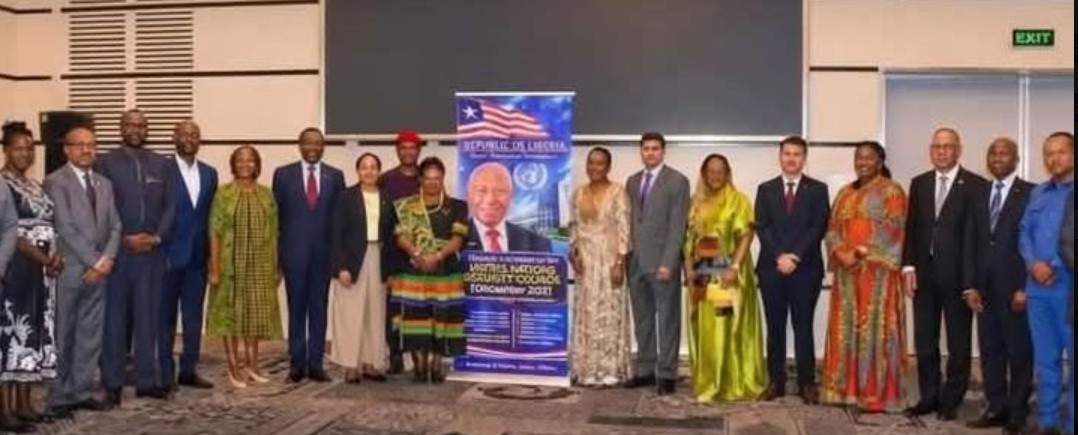
IPNEWS: Liberia has secured diplomatic backing from representatives of 17 countries as it prepares to assume the rotating presidency of the United Nations Security Council (UNSC) in December 2026.
The support was expressed on November 9 during an inaugural Diplomatic Breakfast Meeting hosted by the Liberian Embassy in Accra, Ghana. The meeting brought together members of the Diplomatic and Consular Corps to discuss Liberia’s upcoming leadership of the 15-member Security Council.
The countries represented included Sierra Leone, Nigeria, Rwanda, Kenya, Mozambique, Algeria, Sudan, South Sudan, Senegal, South Africa, Barbados, Zambia, Libya, the Sahrawi Republic, Namibia and Angola.
Participants encouraged President Joseph Nyuma Boakai to use Liberia’s presidency to advance the country’s interests and broader African priorities, particularly in conflict resolution, peacebuilding, sustainable development and reform of international institutions.
Liberia’s Ambassador to Ghana, Musu Jatu Ruhle, welcomed the support and said the government was preparing to ensure the country effectively discharges its responsibilities during the December presidency.
She noted that Liberia’s experience of civil conflict and post-war recovery could offer valuable lessons for international peacebuilding, highlighting the importance of dialogue, justice, reconciliation and human dignity.
Ruhle also outlined priorities identified by Foreign Affairs Minister Sara Beysolow Nyanti for Liberia’s engagement at the Council. These include expanding the participation of women and young people in conflict prevention and peacebuilding, addressing the links between climate change, natural resources and conflict, and strengthening security cooperation in West Africa and the Sahel.
Other priorities include advocating reform of the Security Council and strengthening United Nations peacekeeping operations.
The ambassador called for stronger cooperation among African governments, regional organizations and international partners, emphasizing that Africa’s representation in global decision-making must translate into meaningful influence.
“Representation alone is not enough,” she said, stressing the need for African concerns to receive serious consideration in international discussions.
Ruhle acknowledged that African countries may not always share the same positions on global issues but said sustained dialogue could help them identify common ground and strengthen their collective influence.
Liberia’s December presidency will provide an opportunity to advance discussions on international peace and security while bringing greater attention to African priorities and the country’s stated agenda for the Council.
