



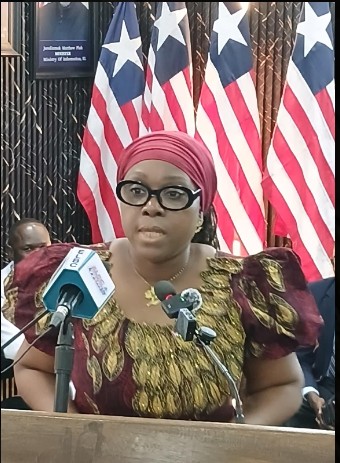
IPNEWS: Employees of the Ministry of Foreign Affairs have praised Foreign Minister Sara Beysolow Nyanti for what they described as significant reforms in staff welfare, salary improvements, transportation, healthcare, and professional development over the past two years.
However, the reported improvements have also renewed questions about the growing disparities in working conditions across government ministries and agencies.
According to highlights presented by the Ministry of Foreign Affairs Workers Association (MOFAWA), the minimum monthly salary at the Ministry has increased from US$118 to US$250, representing a substantial adjustment aimed at improving the financial conditions of employees.
The Association also disclosed that the Ministry is paying 100 percent of employees’ health and life insurance premiums for the current year.
Additionally, the Ministry’s in-house medical clinic has been expanded to improve healthcare access for workers.
On professional development, MOFAWA reported that more than 85 employees have benefited from foreign exchange programs, diplomatic training, and other capacity-building opportunities.
More than 60 employees also participated in training programs in China in July 2026.
The Ministry has reportedly appointed approximately 40 employees to serve in Liberia’s foreign missions during a major round of appointments, while creating additional opportunities for career employees to occupy senior positions within the institution.
Speaking on behalf of the workers, MOFAWA President Samuel Borbor commended Minister Nyanti and her Senior Management Team for the reported improvements.
The Association also recognized President Joseph Nyuma Boakai Sr. for supporting initiatives intended to improve the welfare and working conditions of public servants.
However, despite the praise, MOFAWA acknowledged that significant challenges remain unresolved, including salary disparities, outstanding staff welfare concerns, and other workplace difficulties.
This admission suggests that the reforms, although welcomed, have not addressed all the concerns confronting employees.
Some Ministry of Information employees who attended the program expressed frustration, claiming that certain workers take home approximately US$150 monthly, an amount they believe is insufficient to meet basic living expenses amid rising economic pressures.
One employee, who requested anonymity, described the situation as a slow deterioration of workers’ welfare, alleging that employees at the Ministry of Information are struggling to survive despite their continued service to the government.
The employees further questioned why some ministries and government agencies have reportedly introduced internal salary adjustments and other welfare improvements while workers at the Ministry of Information continue to complain about low salaries and limited benefits.
They also raised concerns about what they described as the continued existence of a culture of neglect at the Ministry of Information, arguing that the departure of ghost names and other payroll-related irregularities should create an opportunity for genuine improvements in the welfare of legitimate employees.
The situation raises broader questions about fairness in the distribution of government resources and whether public sector reforms are being implemented consistently across ministries and agencies.
While the Foreign Affairs Ministry is receiving commendation for its reported interventions, employees elsewhere in government are demanding similar attention to their economic conditions.
The Boakai administration faces a broader challenge: ensuring that improvements in public service delivery and workers’ welfare do not remain concentrated in selected institutions but extend across government.
Public servants should not have to work in one ministry to benefit from better salaries, healthcare, transportation and professional opportunities.
