



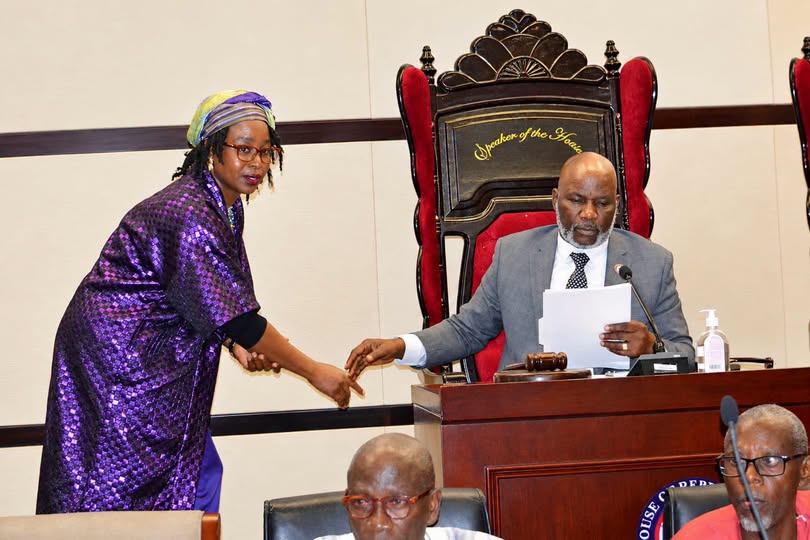
IPNEWS: The Interim Director General (IDG) of the National Public Health Institute of Liberia (NPHIL), Dr. Sia Wata Camanor, today appeared before the Plenary of the House of Representatives in response to an invitation to provide an update on Liberia’s level of preparedness for the ongoing Ebola Virus Disease (EVD) threat.
During her appearance, Dr. Camanor outlined measures NPHIL is implementing, in collaboration with the Ministry of Health (MoH) and other national and international partners, to strengthen the country’s readiness to detect, prevent, and respond to any potential Ebola case.
The briefing focused on key pillars of preparedness, including surveillance, case management, laboratory capacity, infection prevention and control (IPC), risk communication and community engagement (RCCE), and preparedness at the country’s Points of Entry (PoEs).
Dr. Camanor informed lawmakers that surveillance remains a critical component of Liberia’s preparedness strategy. NPHIL continues to work with county health teams, surveillance officers, healthcare facilities, and other relevant stakeholders to strengthen early detection and reporting.
On case management, Dr. Camanor highlighted the importance of promptly identifying suspected Ebola cases, safely transporting them, isolating them, and managing them with trained healthcare personnel in accordance with established public health protocols.
The IDG also briefed the lawmakers on laboratory preparedness, stressing the importance of timely and reliable diagnostic testing in the early detection and confirmation of suspected Ebola cases.
She noted the critical role of the National Public Health Reference Laboratory in supporting disease detection and response.
She explained that NPHIL is working with the Ministry of Health, local authorities, community leaders, healthcare workers, and media institutions to disseminate accurate and timely information about Ebola prevention, symptoms, transmission, and the importance of early reporting.
The IDG further highlighted the importance of communicating public health messages in languages and formats that communities can understand, particularly in border areas and other locations considered important for preparedness activities.
She reiterated the importance of early reporting, adherence to public health guidance, and reliance on verified information from NPHIL and the Ministry of Health.
The appearance before the House of Representatives provided an opportunity for lawmakers to receive an update on the country’s preparedness efforts and to engage with NPHIL on the measures being implemented to safeguard public health.
NPHIL reaffirmed its commitment to its mandate of protecting the health of the Liberian people through disease surveillance, early detection, scientific evidence, and coordinated public health emergency preparedness and response.
