



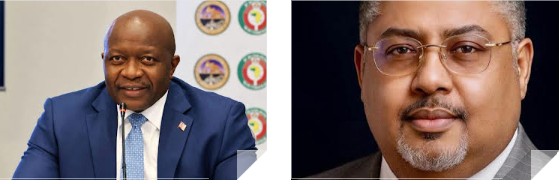
IPNEWS: Former Unity Party Chairman Amin Modad has criticized the proposed US$2.5 million allocation for Liberian-owned businesses, arguing that the amount is too small to significantly transform the country’s economy.
Modad said the government’s approach to entrepreneurship in the proposed national budget places too much emphasis on youth empowerment and social interventions rather than treating local businesses as a major driver of economic development.
While acknowledging the importance of financial support for women, young entrepreneurs, education, healthcare, and social protection, he maintained that the current funding level is inadequate to address the structural challenges confronting Liberian businesses.
According to him, the budget lacks substantial investment in industrial parks, local-content incentives, large-scale financing opportunities for small and medium-sized enterprises, agricultural value chains, and other initiatives that could strengthen Liberian-owned businesses.
He noted that limited access to capital has remained one of the biggest obstacles to the growth of local enterprises, adding that many Liberian businesses that once experienced significant expansion are still struggling to recover from the effects of the global financial crisis, Ebola, and the COVID-19 pandemic.
Referring to Liberia’s recent Conference on Nonperforming Loans, Modad said discussions at the gathering further highlighted the financial difficulties facing local businesses and the urgent need for improved access to affordable capital.
He argued that meaningful economic transformation would require the government to increase and properly monitor investments targeting Liberian entrepreneurs, local production, and value addition.
Modad further stressed that Liberia must reconsider its budget priorities by directing more resources toward critical sectors, including rural road connectivity, reliable electricity, food security, and agricultural development.
He warned that without stronger capital investment, comprehensive tax reforms, and effective monitoring of public spending, Liberia’s economy would remain vulnerable to both internal and external economic shocks.
The former Unity Party chairman called for a more strategic economic approach, emphasizing that the country must move beyond short-term interventions and begin building a stronger foundation for sustainable growth and private-sector development
