



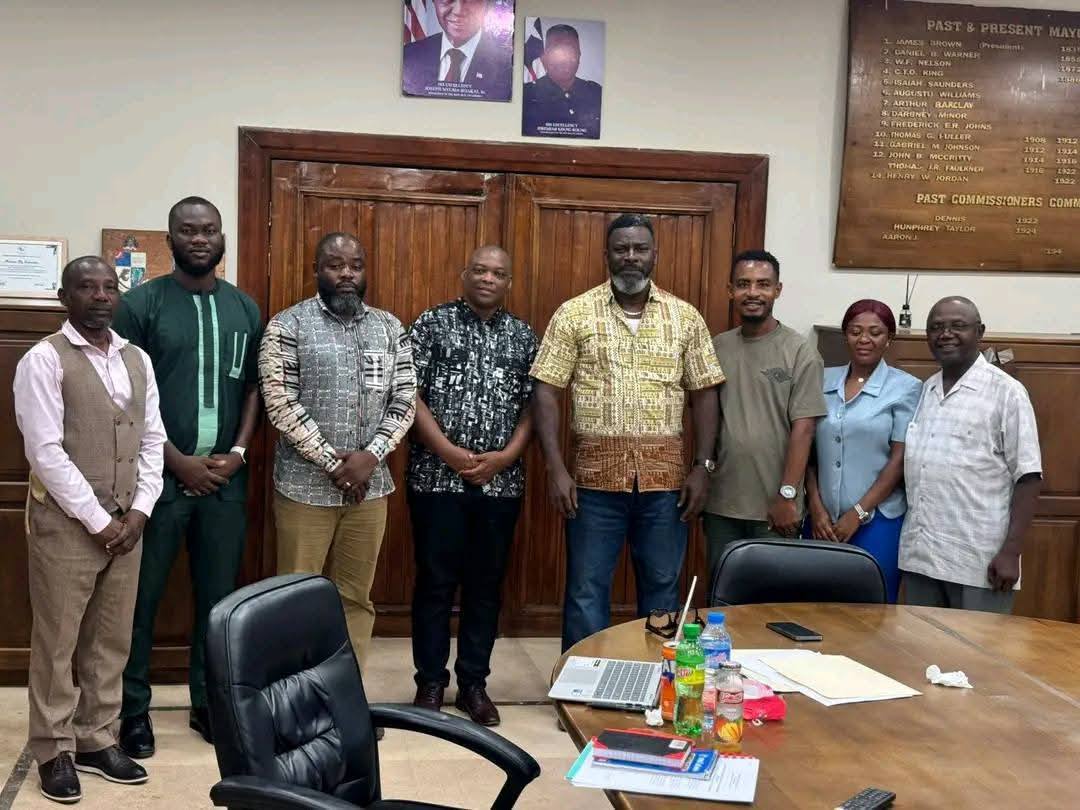
IPNEWS: The Monrovia City Corporation (MCC) has established a strategic partnership with Small and Medium Enterprises (SMEs) and Community-Based Enterprises (CBEs) to modernize waste management across the capital.
Under a new framework with the Liberia Solid Waste Management Association (LISWA), SMEs and CBEs are deployed to designated districts under performance-based contracts to ensure full urban waste collection.
To improve transparency, all households and businesses served by these SMEs must use digital payment systems, including mobile money and bank transfers, for waste collection fees.
In September 2024, the MCC partnered with 26 local businesses to support a new waste disposal strategy focused on utilizing city transfer stations.
Community-based enterprises are officially licensed to provide door-to-door rubbish collection for residents and small businesses within specific zones.
The MCC frequently collaborates with private groups, such as the Hallmark Waste Management and Sanitation Group, for targeted cleanups in areas like Congo Town.
Partnering with international organizations like Cities Alliance, the MCC has explored waste-to-energy initiatives that involve informal workers and local SMEs in sustainable energy production.
The MCC maintains a reciprocal penalty structure where private companies face fines for service failures, and residents may be prosecuted for refusing payment. Recent enforcement actions include fining the Liberia Marketing Association (LMA) for illegal dumping and requiring them to coordinate more closely with SMEs for proper disposal.
Recently, in his 2026 State of the City Address and recent public statements, Monrovia City Mayor John-Charuk Siafa identified several critical challenges currently hindering waste management in the capital.
The Whein Town Sanitary Landfill, established in 2012 with a five-year lifespan, has far exceeded its design capacity, leading to technical disruptions and unusual waste accumulation at collection points.
The Monrovia City Corporation (MCC) faces a significant budget shortfall. For 2024, the MCC requested over $11 million but only received roughly $3.7 million in the draft national budget, a 23% decrease from the previous year.
There is a critical lack of logistics, specialized equipment, and trained human resource capacity needed to maintain a “Clean and Green” city.
Illegal dumping by residents and businesses remains a major issue. The Mayor recently fined the Liberia Marketing Association for improper disposal at key commercial hubs.
Population growth and rapid urban expansion have overwhelmed existing systems, resulting in only an estimated 23% collection rate for the daily waste generated.
A lack of enforced city ordinances and a national solid waste management policy makes it difficult to compel households and businesses to pay for collection services.
To address these, Mayor Siafa is pushing for a multi-stakeholder approach, including Public-Private Partnerships (PPP) and increased community involvement as part of his five-year strategic blueprint, “The Monrovia We Want”.
Monrovia City Corporation (MCC) has joined hands with the Liberia Solid Waste Management Association (LISWA) to transform waste management in the capital. The new plan will create thousands of green jobs through Small and Medium Enterprises and Community-Based Enterprises. A digital payment system will be introduced for households, businesses, and institutions to ensure transparency. Strict penalties will apply to both service providers and residents who fail to comply. The Mayor says this marks a new culture of responsibility in Monrovia.
