



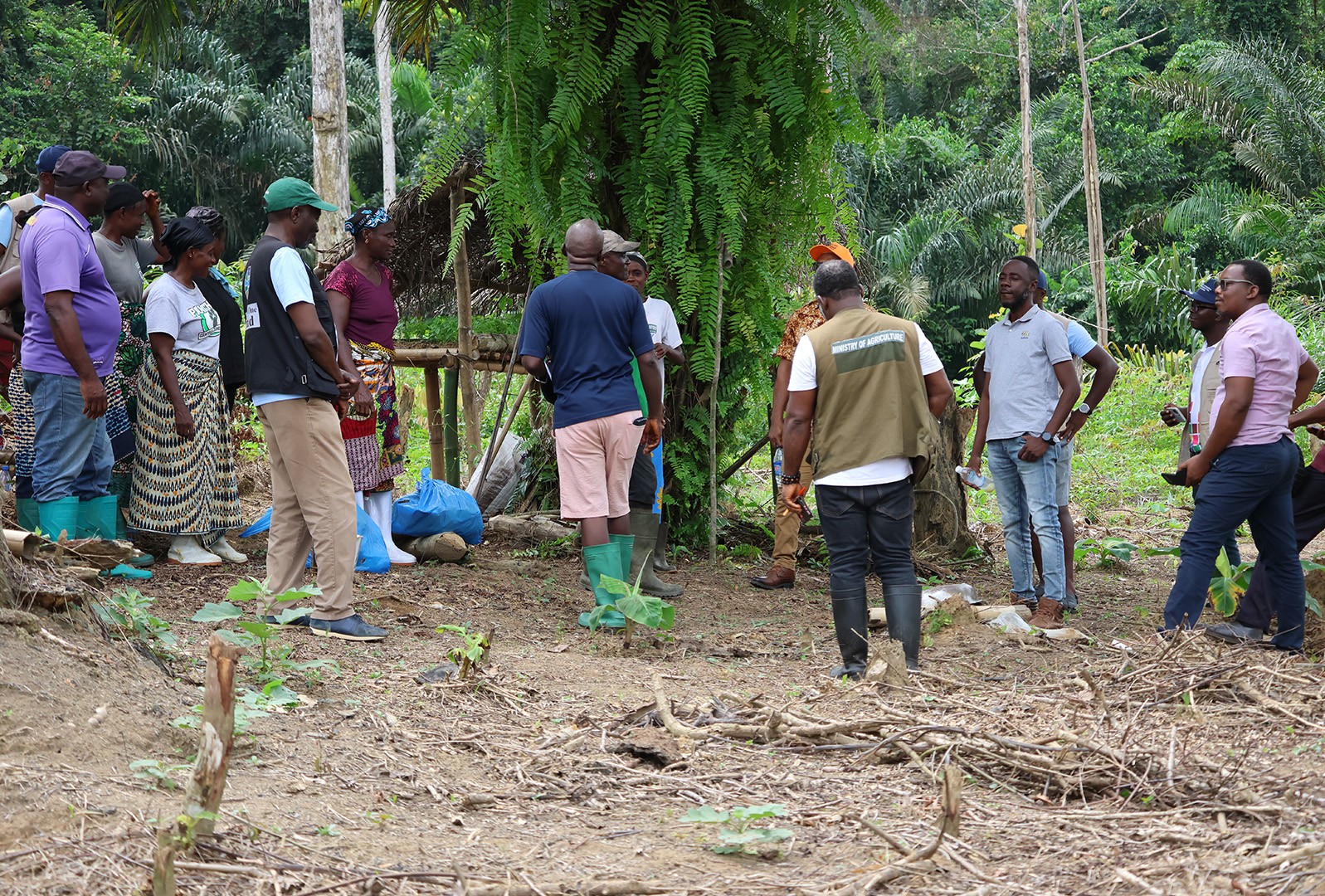
IPNEWS: The morning offers no shade. The sun pushes through the gray haze, and the heat sticks to the skin. Still, the team keeps moving through Liberia’s forestedge communities.
Representatives from the Forestry Development Authority (FDA), PADEV, the Swedish Embassy, the Ministry of Agriculture, FAO, and UNDP walk together with one goal which is to support the people who live closest to Liberia’s forests and help them protect these important natural areas.
A Quiet Change in the Forest
Across Grand Gedeh, River Gee, and Sinoe counties, a quiet but important change is happening. You won’t see big celebrations, but you will notice it in the way people work with their hands in the soil and their minds focused on new, better ways to care for the forest.
Farmers who once used shifting cultivation now plant in straight, organized rows using ClimateSmart Agriculture. People who used to depend on hunting or cutting trees are now keeping bees, raising goats and sheep, and joining Village Savings and Loan Associations (VSLAs) to support their families.
Where survival once depended on activities that harmed the forest, communities are now choosing methods that help both people and nature. What used to be survival is sustainable growth and what used to be extraction is becoming protection.
These communities are not only earning income, but they are also helping to protect one of the world’s most important carbonabsorbing forests. And they understand the value of what they are doing. The pride on their faces says it all.
How the Project Is Helping Forest Communities
Through the CommunityBased Forestry Management (CBFM) project run by UNDP and FAO with support from the Swedish Embassy, PADEV works directly with communities to provide practical, handson solutions that reduce pressure on the forest. These activities help people earn income in ways that protect, rather than harm, the environment.
ClimateSmart Farming
- Training farmers to plant in straight rows
- Teaching how to grow seedlings in nurseries
- Helping manage soil health and prevent erosion
- Making compost and natural fertilizers
Beekeeping
- Providing modern beehives and protective gear
- Training in safe and effective honey harvesting
- Showing how beekeeping can work alongside farming
Raising Goats and Sheep
- Supporting goat and sheep production
- Building better animal shelters
- Improving animal health and grazing practices
Cane Rat Farming (Pilot Project)
- Started in Gbalawein, Sinoe County
- 19 healthy cane rats used to begin the project
Village Savings & Loan Associations (VSLA)
- Giving families access to small, local loans
- Helping households save money and build resilience
- Supporting small businesses and farm investments
Each of these activities does more than create income. They give families stability, confidence, and new ways to protect the forest for the long term.
Faces of the New Future
In Dweh Town, Victoria and her husband Daniel care for a oneacre farm that once struggled during the dry season. They used to carry water from a nearby stream just to keep their plantain and pepper crops alive. They did not give up.
After PADEV’s training, they now use nursery beds and better planting techniques. Their crops are healthier, and the farm is doing well.
“With the way I see the plants growing now, I am hopeful,” Victoria says. Behind her, the green rows show real progress.
Oretha Krayou used to plant her cocoa randomly, without knowing how to protect the soil. Today, she has moved away from scattered planting to healthy soil. Oretha now makes natural fertilizer and takes care of her land properly. Smiling proudly, she says “We are going to make good money.”
Once a hunter, Randall B. Naigow now stands as a protector. Randall’s story shows true change. He once hunted animals in the forest to survive. Now, he has stopped hunting and focuses on farming instead. “We can farm in the forest and let the animals live free,” he says. His voice and smile show both pride and relief.
Victor Tarley Wulu is leading the beekeeping movement. As the head of the beekeeping group, Victor stands proudly beside modern hives. “We never knew that bees could stay in a forest,” he laughs. Beekeeping is more than a livelihood; it’s now a lifestyle.”
When Livelihoods and Conservation Grow Together
Across these forestedge communities, the results are clear. Families earn more from honey, crops, and livestock, people depend less on hunting or cutting trees to survive, women and youth are gaining financial stability through VSLAs, wildlife is safer as hunters choose new livelihoods and farmers are gaining knowledge through regular visits and support. Even early challenges such as losing some cane rats were quickly addressed through followup help, so no one was left behind.
A Forest Protected, A People Empowered
In these communities, the future is changing. People are finding ways to succeed without harming the forest. A new balance is forming, one where people and nature support each other.
From hunters to guardians. From scattered farming to climatesmart farming. From vulnerability to resilience. From working alone to working together.
These communities are writing a new story, one that proves conservation and prosperity can happen at the same time. They are showing Liberia, and the world, that when people are empowered, the forest breathes easier.
Across Liberia’s green forests, the seeds of a sustainable future are growing, nurtured with hope, courage, and care by the people who call these forests home.
