



IPNEWS: Finance and Development Planning Minister Augustine Kpehe Ngafuan has come under growing public scrutiny following his defense of the government spending record amid questions about whether Liberia’s expanding national budget is delivering meaningful economic benefits to ordinary citizens.
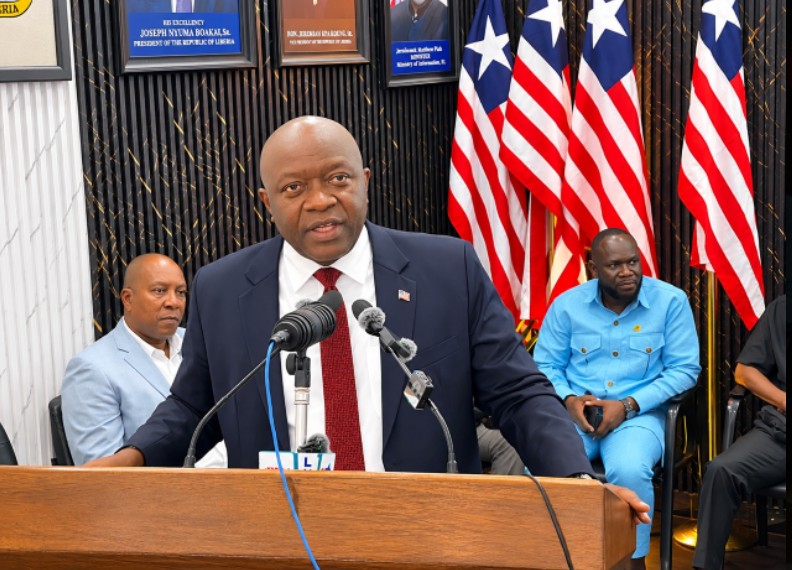
Speaking Monday, November 9, 2026, during a special press briefing at the Ministry of Information in Monrovia.
Minister Ngafuan dismissed criticisms surrounding the impact of government spending, describing them as an attempt to “demonize success.”
However, his response has raised further questions about accountability, transparency and the government willingness to address citizens’ concerns about the actual impact of public expenditure.
The minister’s defense comes as the government prepares a proposed US$1.54 billion national budget for fiscal year 2027, at a time when citizens are demanding greater accountability over how public resources are allocated and whether increased government spending is improving living conditions.
Defending the administration’s expenditure of more than US$1 billion, Ngafuan pointed to investments in healthcare, education, road rehabilitation, and public transportation as evidence that government spending is positively affecting the population.
He cited government support for a hospital reportedly facing closure, the school feeding program and road rehabilitation projects as examples of investments intended to improve public welfare.
He also argued that improved road connectivity has reduced transportation difficulties for market women and residents traveling to southeastern Liberia.
The finance minister further referenced the presence of National Transit Authority buses along the southeastern corridor, claiming that the services have reduced transportation costs and improved movement between counties.
However, concerns remain over the accessibility, affordability, and overall reach of these services, particularly for low-income families.
Despite his defense, Ngafuan acknowledged that Liberia’s development challenges remain enormous, admitting that even a US$1 billion national budget cannot address all of the country problems.
He also disclosed that ministries and government agencies submitted spending requests totaling nearly US$3 billion for FY2027, far exceeding the government’s proposed allocation.
Although the proposed FY2027 budget represents an approximately 18 percent increase, the expansion has intensified public debate over whether additional allocations will translate into better healthcare delivery, improved education, employment opportunities, infrastructure development and economic relief for struggling households.
For some residents of Monrovia, the minister’s explanation has failed to address the fundamental question of how government spending has directly improved their daily lives.
Joseph Clay, a resident of Central Monrovia, questioned how much of the government’s more than US$1 billion expenditure had directly benefited ordinary Liberians since January.
Referring to Ngafuan’s earlier comments on OK FM, Clay argued that much of the spending appeared to be directed toward salaries and other government obligations while ordinary citizens continued to struggle with economic hardship.
Comfort Harris, a secondhand clothing vendor operating in Monrovia and its environs also challenged the minister’s defense, suggesting that government officials were more concerned about justifying their salaries and benefits than addressing the economic difficulties confronting the population.
She pointed to children engaged in street trading and questioned the availability of government-supported scholarship opportunities for students attending local schools.
The contrasting positions expose a growing disconnect between the government’s presentation of its spending achievements and citizens’ expectations for visible improvements in their economic conditions.
As the Legislature prepares to consider the proposed FY2027 national budget, the government faces increasing pressure to demonstrate that rising public expenditure is producing measurable results.
The success of the budget may not be determined by its size or the government claims, but by whether ordinary Liberians can experience meaningful improvements in their living conditions.
