



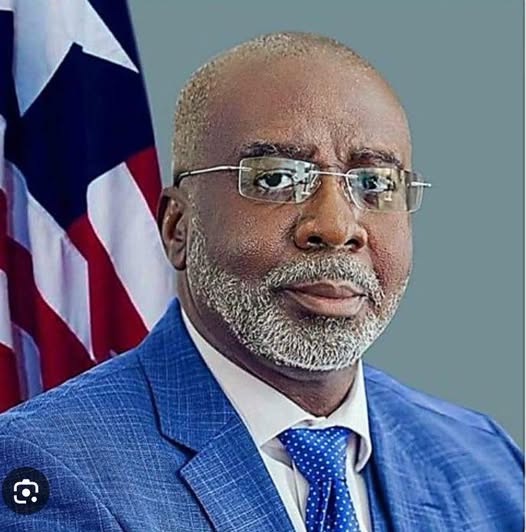
—As Koffa Proposes Social Safety Fund
IPNEWS: Several Liberians mainly Market Women and Students have hailed Former House Speaker and current Grand Kru County District #2 Representative, Cllr. J. Fonati Koffa, for his farsightedness over his proposed the establishment of a US$25 million National Social Safety Net Fund to provide immediate financial relief to vulnerable citizens in Liberia.
First introduced in late 2025 and heavily pushed for inclusion in the 2026 national budget, the proposal has gained renewed urgency following recent World Bank reports showing a rise in extreme poverty despite overall economic growth. Koffa argues that the government cannot boast about rising revenues while its citizens sink deeper into poverty.
The fund according to former Speaker Koffa is designed as a short-term, direct intervention to help struggling families manage two of their most crushing daily financial burdens.
It also aimed at helping families avoid eviction and preventing internal migration caused by severe housing insecurity.
Former Speaker stated that the National Social Safety Net Fund is Intended to keep children in school, ensuring they are not kept home out of financial shame, including Provision for medical assistance for families facing unexpected health crises.
The Funding Blueprint is to finance the US$25 million initiative without overextending the national treasury, Representative Koffa outlined a series of strict government austerity measures and resource reallocations by cutting non-essential benefits and allowances across all three branches of government, restricting expensive foreign travel for public officials unless it involves a critical national mission, and Freezing the purchase of new, high-end government vehicles for ministries and agencies.
Also, the Fund seeks to channel a portion of the operational surplus from the Liberia Petroleum Refining Company (LPRC) into the fund, and secure a temporary loan with structured repayment terms from the National Social Security and Welfare Corporation (NASSCORP).
The proposal was submitted directly to the House Plenary, where Koffa urged his colleagues to treat the economic hardships of Liberians with the highest level of moral order and urgency. The House of Representatives subsequently forwarded the communication to its joint committees—including Ways, Means, and Finance; Public Accounts; and Gender—for official review and integration into the 2026 National Budget process which was never followed.
Last week Tuesday, November 3, 2026, an estimated 1,500 Liberian businesswomen and importers marched to the Capitol Building in Monrovia to petition the 55th Legislature.
Operating under the banners of “China Business Women United With One Voice” and the “Consortium of Liberia Importers,” the traders demanded immediate government intervention to address severe economic hardships and systemic supply chain bottlenecks that are threatening to collapse their businesses.
The businesswomen highlighted five primary crises driving the economic hardship and disrupting local commerce including Cargo shipments from China and other Asian hubs are taking between six to seven months to reach the Freeport of Monrovia. This ties up commercial capital and leaves millions of dollars in merchandise stranded at sea.
They asserted that because of the protracted transit delays, delivery orders expire, forcing women to pay excessive renewal fees and daily demurrage charges. The protesters specifically named shipping lines, including Maersk, for imposing what they described as unjustified service costs.
The traders expressed anger over the weak enforcement of the Liberianization Policy. They alleged that foreign merchants—particularly Chinese retailers within Liberia—are importing identical goods and undercutting local, women-owned businesses by selling them at significantly lower prices.
Local entrepreneurs are facing massive financial pressure due to high bank interest rates, aggressive service fees, and short loan repayment windows.
Protesters cited the Liberia Revenue Authority (LRA) for imposing high customs tariffs on shipping containers, compounding their financial vulnerability.
The consortium urged the Senate and House of Representatives to act swiftly by adopting the following measures including the Introduction a Loan Grace Period: Engage the Central Bank of Liberia (CBL) and commercial banks to implement a mandatory minimum 90-day grace period before loan repayments begin.
That government launch an official inquiry into port operators, customs brokers, and private shipping lines regarding delays and hidden charges, including the active enforcement of policies that protect Liberian-owned small businesses and the informal economy from predatory foreign retail competition.
In recent times, Liberians are experiencing escalating economic distress, marked by skyrocketing inflation, pervasive unemployment, and worsening extreme poverty, leading to widespread public demands for the administration of President Joseph Boakai to address immediate “bread and butter” issues.
Despite recent announcements that Liberia’s annual national budget has surpassed US$1 billion, ordinary citizens report that this macroeconomic growth has failed to improve their daily livelihoods. Main points of domestic frustration include a recent World Bank report highlighted that extreme poverty in Liberia increased from 34.6% in 2024 to 36.1% in 2025.
The businesswomen highlighted five primary crises driving the economic hardship and disrupting local commerce including Cargo shipments from China and other Asian hubs taking between six to seven months to reach the Freeport of Monrovia. This ties up commercial capital and leaves millions of dollars in merchandise stranded at sea reach the Freeport of Monrovia. This ties up commercial capital and leaves millions of dollars in merchandise stranded at sea.
They asserted that because of the protracted transit delays, delivery orders expire, forcing women to pay excessive renewal fees and daily demurrage charges. The protesters specifically named shipping lines, including Maersk, for imposing what they described as unjustified service costs.
The traders expressed anger over the weak enforcement of the Liberianization Policy. They alleged that foreign merchants—particularly Chinese retailers within Liberia—are importing identical goods and undercutting local, women-owned businesses by selling them at significantly lower prices.
Local entrepreneurs are facing massive financial pressure due to high bank interest rates, aggressive service fees, and short loan repayment windows.
In recent times, Opposition figures, like Alexander B. Cummings of the Alternative National Congress (ANC), and local labor statistics report that over 90% of the population remains stuck in underemployment or the unregulated informal sector without social protections.
High inflation, driven partly by a weakening Liberian Dollar, has sent the cost of basic commodities—such as food and school fees—out of reach for low-income families, leaving vendors in major trading centers like the Waterside and Clara Town markets dealing with low consumer demand.
Government Layoffs & Spending: Public discontent has been exacerbated by the Civil Service Agency (CSA) removing over 5,500 people from the government payroll. Citizens have sharply criticized officials for prioritizing luxury perks, such as expensive vehicles, while basic public infrastructure like electricity, clean water, and community healthcare remain severely underfunded.
